
The Forty Acres Were Real: Lifting the Veil — No. 2
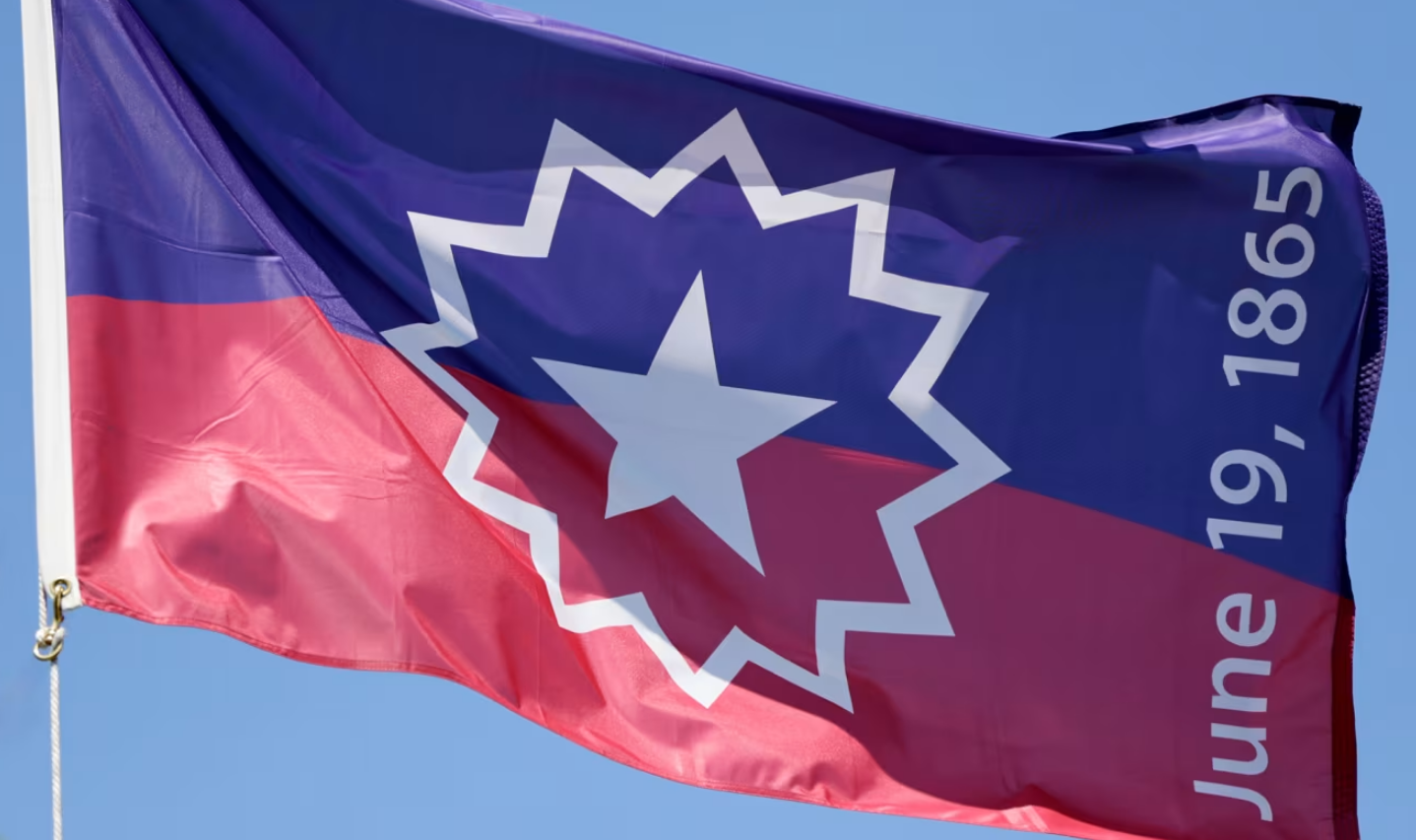
Image of Juneteenth Flag
On June 19, 1865, Major General Gordon Granger stood on a balcony in Galveston, Texas, and read General Order No. 3 to the people of the city. “The people of Texas are informed,” he announced, “that… all slaves are free.” It had been two and a half years since the Emancipation Proclamation. The enslaved people of Texas learned that day that the law had freed them long before anyone had bothered to tell them. The country celebrates that date now as Juneteenth. At the moment Granger spoke, roughly 40,000 freedpeople were already living on land of their own.
Five months earlier, on January 12, 1865, twenty Black ministers had met with General William T. Sherman and Secretary of War Edwin Stanton at Charles Green’s mansion on Madison Square in Savannah. Sherman asked the ministers what their people needed to take care of themselves. The spokesman, Garrison Frazier — a sixty-seven-year-old Baptist minister born into slavery and freed eight years earlier when he bought himself and his wife for one thousand dollars — answered directly. The way to be free, he said, was to have land, and to turn it and till it by their own labor.
Four days later, on January 16, 1865, Sherman issued Special Field Order No. 15. He set aside roughly 400,000 acres of confiscated coastal land — the Sea Islands and a thirty-mile strip from Charleston south to the St. John’s River in Florida — for settlement by formerly enslaved families. Each family would receive up to forty acres. Sherman later authorized the Army to loan out mules.
This is the part of the story the country has agreed to remember as folk memory, or as a broken promise, or as something that never quite happened. It happened. By the time Granger read General Order No. 3 in Galveston, about 40,000 freedpeople had settled on roughly 400,000 acres of coastal land that the United States Army had given them. They planted crops. They built homes. They elected their own leaders. Forty Acres and a Mule was not a slogan. It was a working land reform.
What happened next is the part of the story the country has worked hardest to bury.
Lincoln was assassinated on April 14, 1865. Andrew Johnson — a Tennessee slaveholder and War Democrat whom Lincoln had taken onto the 1864 National Union ticket to bind the border states to the cause — became president. On May 29, 1865, three weeks before Juneteenth, Johnson issued the Proclamation of Amnesty, restoring property rights to most former Confederates who took a loyalty oath. By the fall of 1865 he had ordered the Sherman land returned to its former owners. The man tasked with delivering the news was General Oliver Otis Howard, head of the Freedmen’s Bureau and the man whose name now sits on Howard University. In October 1865, Howard stood in a church on Edisto Island, South Carolina, and told the assembled freedpeople they would have to give the land back.
The freedpeople of Edisto wrote a petition to President Johnson. It is preserved at the National Archives. They asked the President to remember what the government had promised, and they asked him to consider what reconciliation with the planter class meant for them. “The man who tied me to a tree and gave me 39 lashes,” one passage reads, “that man I cannot well forgive.” Johnson ignored it. The land went back to the former Confederates. U.S. Army units that had armed and protected the 40,000 freedpeople only months before were now sent to drive them off; resistance was met with force.
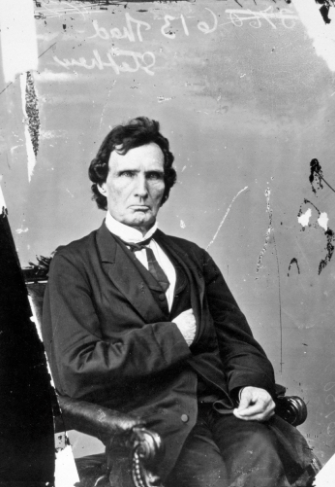
Thaddeus Stevens
In Lancaster, Pennsylvania, a seventy-four-year-old congressman named Thaddeus Stevens was watching this happen and refused to accept it.
Stevens had practiced law in Lancaster since 1842. He lived at 45 South Queen Street with Lydia Hamilton Smith, a free Black widow listed in his household as a housekeeper and, by the account of his most serious recent biographers, his partner of roughly twenty years. He was chairman of the House Ways and Means Committee, the floor leader of the Radical Republicans, and one of the principal authors of the 14th Amendment. On March 19, 1867, with Reconstruction now under Congressional control, Stevens introduced a confiscation bill — historians call it the Stevens Land Bill. It proposed to seize the holdings of the 70,000 largest Confederate landowners, anyone holding more than 200 acres, and to redistribute 40 acres to each adult male freedperson, with the remainder sold to fund pensions for Union veterans and homesteads for the formerly enslaved.
The bill was an attempt to do, at the federal level and by statute, what Sherman had briefly done by military order. It would have remade the Southern economy of land and labor. It would have built a Black landowning class on the ground that had been worked, for two centuries, by stolen labor. It was not radical. It was the bare minimum.
The bill failed. Republican moderates, including many of Stevens’s own colleagues, refused to vote for it. The Northern political class had decided by 1867 that some measure of Black political power was a price worth paying for sectional reunion, but Black land was not. Stevens died at his Washington home on August 11, 1868, two weeks after the 14th Amendment was ratified. Thousands of Black mourners filed past his body. He had instructed in his will that he be buried at Shreiner-Concord Cemetery in Lancaster — an integrated burial ground he chose because most cemeteries in the city were restricted by race — and that his headstone carry the words: “I repose in this quiet and secluded spot not from any natural preference for solitude, but finding other cemeteries limited as to race by charter rules, I have chosen this that I might illustrate in my death the principles which I advocated through a long life: Equality of man before his Creator.”
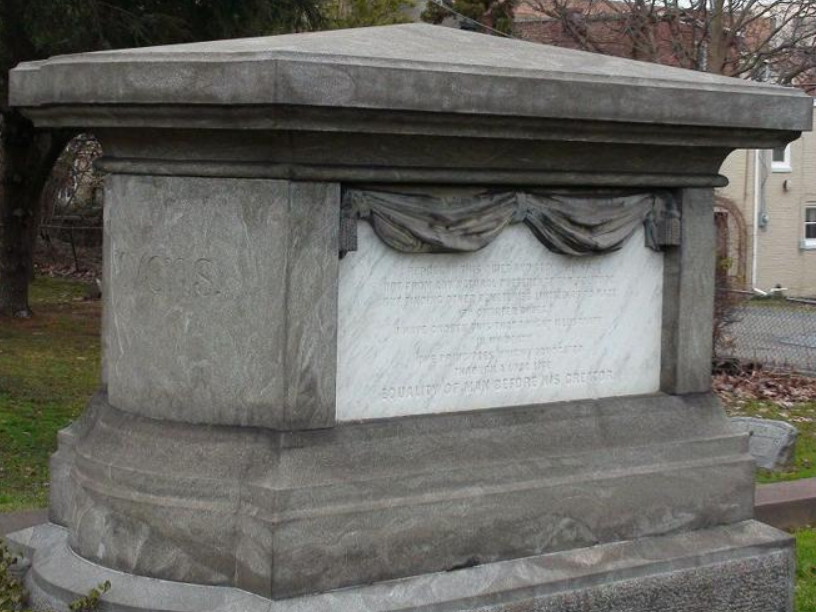
Thaddeus Stevns burial site
The grave is still in Lancaster. The principle is still unfunded.
Economists who have tried to estimate what was taken arrive at numbers in the trillions of dollars. The median Black family in the United States holds roughly one-sixth the wealth of the median white family. There is no honest accounting of the racial wealth gap that does not begin in the fall of 1865, on Edisto Island, with U.S. Army officers telling freedpeople to vacate land the United States had given them.
This is what is buried under Juneteenth. The holiday remembers a day of freedom. It does not remember that within four months of that day, the United States government had decided that the freed people would be free in name but not in land, not in capital, not in security, not in inheritance — and that the difference between those two kinds of freedom would compound across six generations into the country we now have.
Juneteenth deserves to be celebrated. It also deserves to be told honestly.
Frazier. The forty thousand. The Edisto petitioners. Stevens.
The first holiday for Black freedom was a holiday for a freedom the country immediately began taking back. On the date the country celebrates Granger’s announcement in Galveston, it can also acknowledge what it owes the people it freed and then dispossessed. Anything less is a holiday for a country that has not yet decided to tell itself the truth.
— Tony Collins, Lancaster, Pennsylvania
Lifting the Veil is a series of essays recovering pieces of Black history that have been removed from the public record. Previous installment: “The First Memorial Day Was Black.”
read here (https://www.blackvoteroutreachnetworkofpa.org/themessage/the-first-memorial-day-was-black)
If you want to know more:
• “Colloquy with Colored Ministers,” Journal of Negro History (1931).
• Ira Berlin et al., eds., Freedom: A Documentary History of Emancipation.
• Eric Foner, Reconstruction: America’s Unfinished Revolution, 1863–1877 (1988).
• Eric Foner, The Second Founding (2019).
• Steven Hahn, A Nation Under Our Feet (2003).
• Bruce Levine, Thaddeus Stevens: Civil War Revolutionary, Fighter for Racial Justice (2021).
• Hans L. Trefousse, Thaddeus Stevens: Nineteenth-Century Egalitarian (1997).
• William A. Darity Jr. and A. Kirsten Mullen, From Here to Equality (2020).
• Mehrsa Baradaran, The Color of Money: Black Banks and the Racial Wealth Gap (2017).
• Annette Gordon-Reed, On Juneteenth (2021).
• Edward E. Baptist, The Half Has Never Been Told (2014).
• Sven Beckert, Empire of Cotton (2014).
• Federal Reserve, Survey of Consumer Finances (2022).
• Thaddeus Stevens & Lydia Hamilton Smith Center for History and Democracy, 45 South Queen Street, Lancaster, PA