
Lifting the Veil
An Announcement
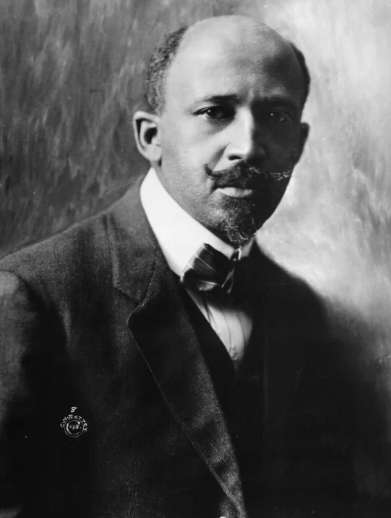
Image of W.E.B. Du Bois
In 1903, W.E.B. Du Bois published The Souls of Black Folk and gave American letters a metaphor it has never managed to put down. A Veil, he wrote, hangs between Black America and the rest of the country. From one side, it keeps white Americans from seeing Black life as it actually is. From the other, it forces Black Americans to watch themselves through a gaze that looks on — in his words — "in amused contempt and pity." To be born Black in America, Du Bois wrote, is to be born behind that Veil, and to be gifted by the same circumstance with what he called second-sight: the ability to see both worlds at once, while being granted no true home in either.
Du Bois did not offer second-sight as consolation. He offered it as a faculty — the clear vision of people made to study a country that refused to study them back. His life's work, across more than half a century, was to put that vision to use: to lift the Veil.
He meant two things by it, and he meant them at once. He meant to show the country what stood on the other side — the labor, the institutions, the political intelligence, the worship, the grief, and the music of Black people in America, set down in the specifics the country preferred to keep blurred. And he meant to free Black Americans from the obligation to see themselves only through white eyes. Lifting the Veil was never a metaphor for politeness, or for "dialogue across difference," or for the soft machinery of reconciliation. It was a demand. The country could not be honest with itself, and Black Americans could not be free, until what lay on the other side of the Veil was made plainly visible.
This series takes its name and its charge from him.
Each installment brings forward a piece of Black history the country has worked to forget, distort, or render invisible — and does so with the specific facts and named actors that erasure depends on the absence of. The subjects will range: Memorial Day, Reconstruction, the Voting Rights Act, the Underground Railroad, the Black church, the Black soldier, the Black organizer, the ancestor whose grave was allowed to vanish. The method does not change. Name the actors. Cite the dates. Locate the ground. Refuse the fog.
The Veil is still here. Du Bois warned that it would outlast Reconstruction, and it has outlasted everything the country has tried since. But the Veil has always been thinnest where the history is most specific. That is the work, and that is the wager of this series: that specificity is its own form of freedom, and that a fact with a name, a date, and a place fixed to it is harder to make disappear.
The first installment is published: "The First Memorial Day Was Black" — on the ten thousand freedpeople who gathered at a Charleston race course on May 1, 1865, to honor the Union dead and hold what the historian David Blight calls the first Memorial Day; and on the Black soldiers and veterans, from the wall at Fort Wagner to the Edmund Pettus Bridge, whose blood paid for the freedoms the country now observes on a Monday in May. read here: (https://www.blackvoteroutreachnetworkofpa.org/themessage/the-first-memorial-day-was-black)
The second installment arrives this Juneteenth: "The Forty Acres Were Real." Juneteenth marks the day in 1865 that freedom was finally announced in Galveston. What the holiday has been allowed to forget is that, at the moment of that announcement, roughly forty thousand freedpeople were already living and working on some four hundred thousand acres of coastal land the United States Army had given them — and that within four months, the federal government began taking all of it back. This installment names the people on both ends of that theft: Garrison Frazier and the Savannah ministers who told General Sherman exactly what freedom required; the freedpeople of Edisto Island who petitioned a president to keep his government's word; and Thaddeus Stevens of Lancaster, Pennsylvania, who tried to make the forty acres law and was defeated by his own party. It runs, as this work tends to, straight through our own ground.
The Veil is still there. So is the history beneath it. We intend to keep lifting.