The First Memorial Day Was Black
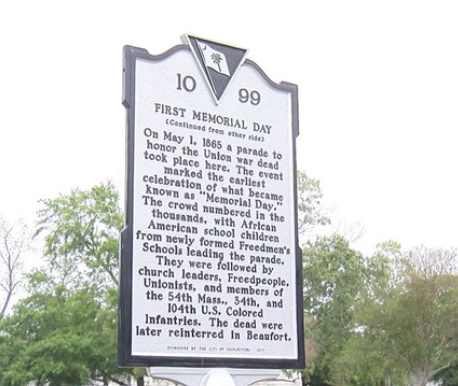
On May 1, 1865, three weeks after the Confederate surrender at Appomattox, roughly ten thousand people gathered at a former Confederate prison camp on the Washington Race Course in Charleston, South Carolina. Most were freed Black residents of the city. They had come to honor the fallen.
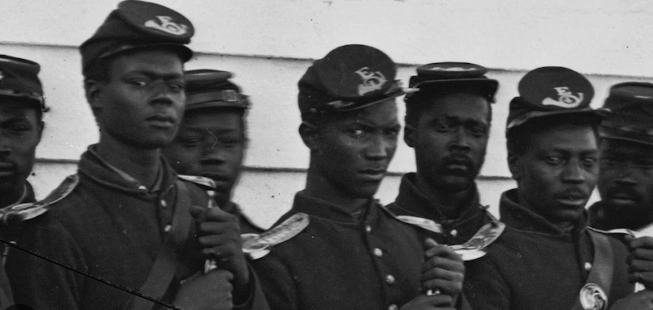
At least 257 captured Union soldiers had died at the Race Course of disease and exposure and been dumped in a mass grave behind the grandstand. In the weeks after Confederate forces evacuated the city, a group of Black workmen — many of them only months out of slavery — exhumed the bodies, built a proper cemetery, fenced it, whitewashed the fence, and over the arched entrance painted the words “Martyrs of the Race Course.” Then they held a parade. Three thousand Black schoolchildren marched first, carrying roses. Behind them came women’s mutual aid societies, Black ministers, and Union infantry, including soldiers of the 54th Massachusetts and the 35th and 104th United States Colored Troops. The Yale historian David Blight, who recovered the day from Union Army reports and contemporary newspaper accounts, calls it the first Memorial Day. It was organized by the people the United States had most recently held as property, and it honored an army that included 180,000 Black men.
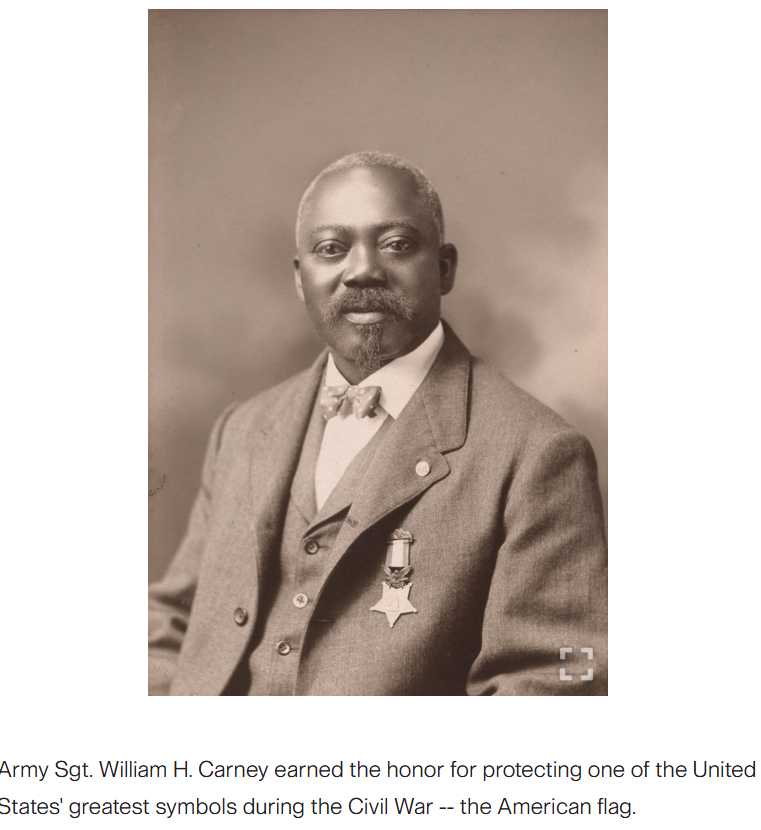
The arithmetic of that service deserves to be stated plainly. Roughly 180,000 Black men served in the Union Army through the United States Colored Troops; another 18,000 served in the Navy. About 40,000 of them died — in segregated regiments, often executed rather than taken prisoner by Confederate forces. The federal government paid them less than white soldiers until Congress equalized wages in June 1864. They fought because the war was, in the end, a war over whether they would be free. Sergeant William H. Carney of the 54th Massachusetts carried the Union flag up the wall at Fort Wagner in July 1863, was shot four times, and brought it back. He was the first Black soldier whose actions earned the Medal of Honor.
Pennsylvania sent its share of those soldiers and remembered very few of them publicly. That has begun to change, slowly, in Harrisburg.
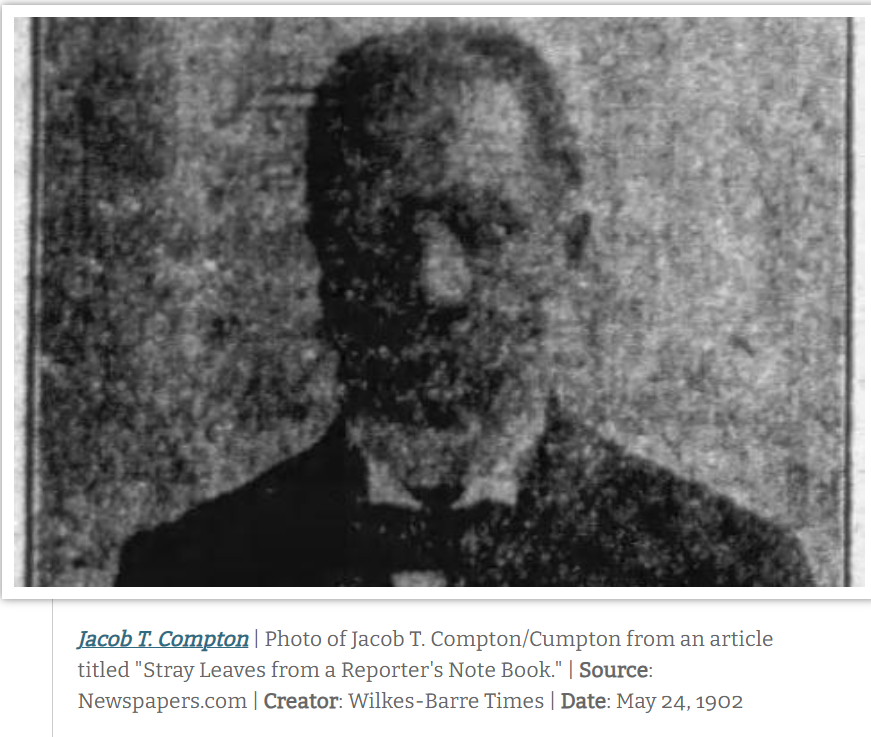
On August 26, 2020, the Commonwealth Monument — A Gathering at the Crossroads: For Such a Time as This — was installed on the State Capitol grounds. The project was led by Lenwood Sloan, and the monument stands on ground where Harrisburg’s Old Eighth Ward, a Black and immigrant neighborhood of more than a thousand families, was demolished to make room for the Capitol complex. Four life-sized bronze figures surround the pedestal. One of them is Jacob T. Compton, sergeant in Company D of the 24th United States Colored Infantry. Compton came home to Harrisburg after the war, founded the Excelsior Band, led the choirs of the African Methodist Episcopal and AME Zion churches, and drove a carriage that once carried Abraham Lincoln through the city in February 1861. He is buried at Lincoln Cemetery in Penbrook, alongside more than ninety other USCT veterans whose graves have only in the last few years begun to be recovered from decades of municipal neglect. The pedestal beneath Compton’s feet carries the names of one hundred families from the Old Eighth Ward — a neighborhood erased so completely that its monument had to be built a hundred and fifty years later by a generation that refused to let the erasure stand.
Compton stands at the visible end of a much longer thread. This is the thread the country has worked hardest to break: the line that runs from a Black sergeant in 1863 to a Black neighborhood paved over in the 1910s to a monument unveiled in 2020. It also runs forward.
The freedom that 40,000 USCT soldiers died for had to be defended again, and again, by other Black soldiers who came home from later wars and were killed for the same cause.
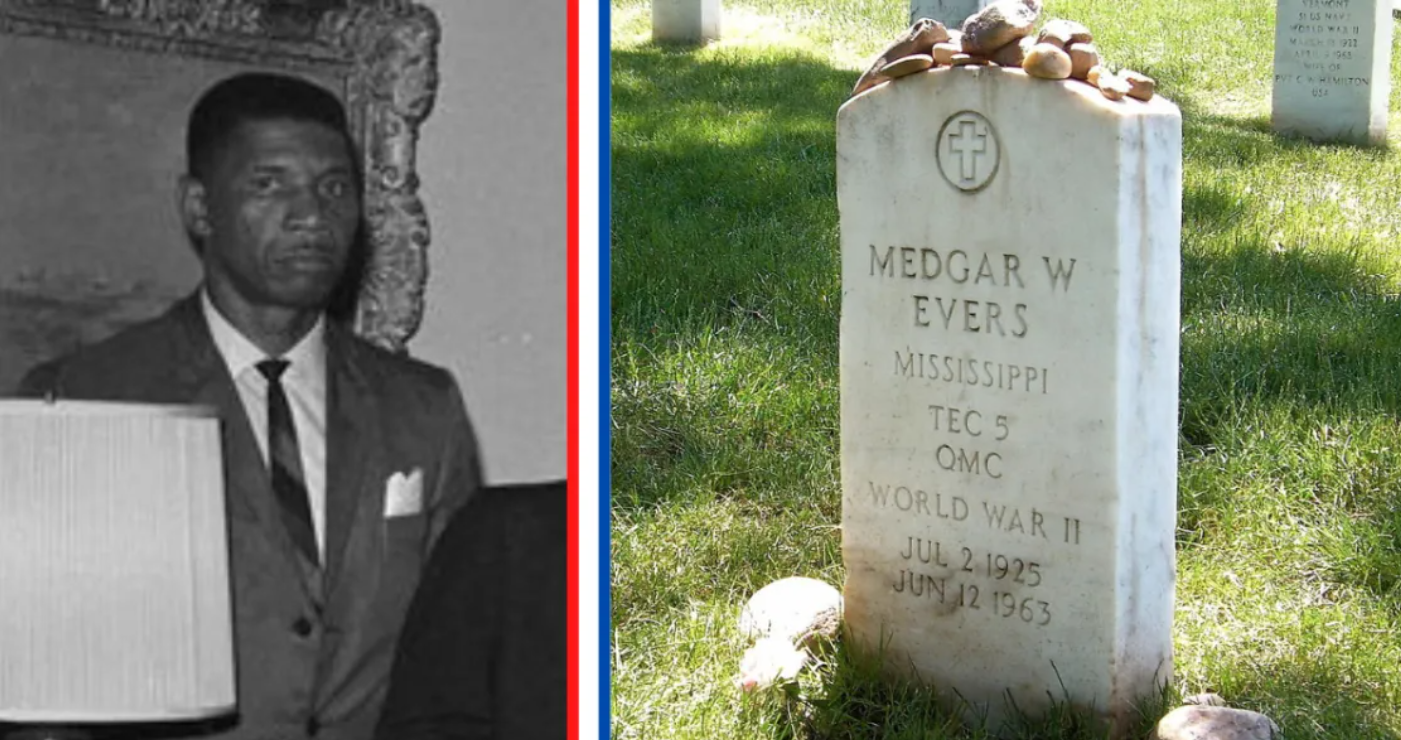
Medgar Evers landed at Normandy in 1944 with a segregated Army transportation unit, came back to Mississippi, became the NAACP’s first state field secretary, and was shot in his own driveway in Jackson on June 12, 1963. He is buried at Arlington with full military honors.
Lamar Smith came back from the Second World War to Brookhaven, Mississippi, organized Black voters, and was shot dead on the lawn of the Lincoln County courthouse on August 13, 1955, in broad daylight, in front of witnesses. No one was ever convicted.
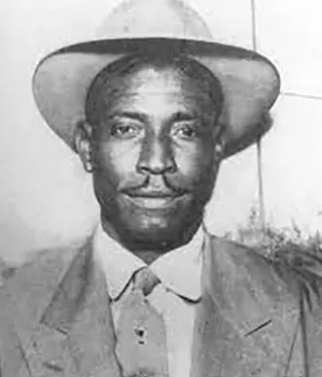
Image of Lamar Smith
Hosea Williams came back from the European theater with a Purple Heart — the only Black survivor of a thirteen-man platoon — and led the front row of marchers across the Edmund Pettus Bridge in Selma on March 7, 1965, where Alabama state troopers fractured his skull.
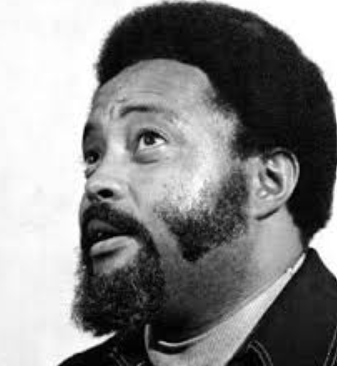
Image of Hosea Williams
Amzie Moore came back from the China-Burma-India theater to Cleveland, Mississippi, opened a service station Black travelers could safely use, ran the local NAACP, and mentored a young Bob Moses into the organizing that became Mississippi Freedom Summer.
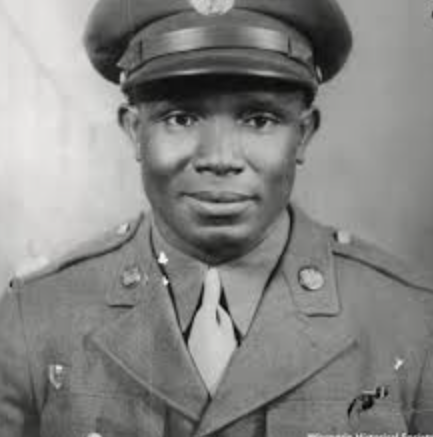
Image of Amzie Moore
Isaac Woodard came back from the Pacific in February 1946, still in his Army uniform, was pulled off a Greyhound bus in South Carolina by the chief of police, beaten with a nightstick, and blinded in both eyes. He was twenty-six.
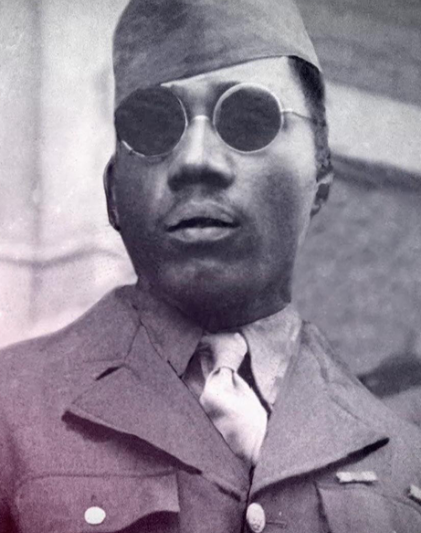
Image of Issac Woodard
The Voting Rights Act was signed on August 6, 1965, five months after Selma. It was paid for. The currency was the blood of Black patriots, drawn at Fort Wagner and at Petersburg, in a driveway in Jackson and on a courthouse lawn in Brookhaven, on a bus station floor in South Carolina and on a bridge in Alabama.
Memorial Day is the holiday on which a country acknowledges what it owes its dead. The honest version of this Monday acknowledges that the United States owes a particular debt to Black soldiers and veterans who fought, twice, for a freedom they were given grudgingly and then had to win again with their lives. Their names should be said out loud.
Carney. Compton. Evers. Smith. Williams. Moore. Woodard.
The first Memorial Day was a ceremony for soldiers like them, organized by the people they fought to free. It is still their holiday. The country has not yet caught up.