
TOWARD BLACK LIBERATION · A NEW LIBERATION MANUAL
Introduction
Without political power, everything else is just theory — and Black people in America have been given theory long enough.
This is a letter to Black people. Written for us. To the person who is tired. To the person who has stopped believing that anything will actually change. To the person who votes, who prays, who works, who shows up — and watches the conditions of Black life remain largely what they have always been. To the person who has felt, quietly and for a long time, that the fight is real but has wondered whether it is winnable.
Black people have been fighting since the moment we arrived on this land. Every generation that came before us resisted, organized, sacrificed, and passed forward whatever ground they gained. We stand on their shoulders. We owe the same to every generation that comes after us — to get into the fight, to hold the line, to pass forward something better than what we inherited. That is what these essays are for.
The material conditions of Black America have stalled. The brutality has been laundered through policy, through statistics, through the quiet violence of a system that does not need to announce itself because it has been so thoroughly normalized. The wealth gap widens. The prisons fill. The schools empty of resources while filling with children who deserve better. Du Bois told us in 1903 that the problem of the twentieth century is the problem of the color line. He was writing a warning. In 2026 the warning is still live.
The apathy this produces is understandable. It is also the system’s greatest achievement. A people who do not believe liberation is possible will not organize toward it. Will not sacrifice for it. Will not pass it on. The system does not need to defeat us if it can convince us to defeat ourselves. These essays are a refusal of that defeat.
———
The tradition that produced this series is long and serious and belongs to us.
James Baldwin showed us that love — conscious, demanding, clear-eyed love — is an act of political resistance as serious as any march or any vote. To love yourself in a country that has spent centuries communicating your unworthiness is the first and most radical act of liberation.
Frantz Fanon showed us that the colonized mind is the first and most durable instrument of colonial control. The system occupies the self before it occupies the land. Liberation requires us to reclaim our psychological freedom alongside our political power.
Martin Luther King Jr. showed us that power and love are complements. A movement without love becomes what it is fighting. A love without power changes nothing. What this moment requires is both — simultaneously and without apology.
bell hooks showed us that love is a practice. A daily, deliberate decision to nurture your own growth and the growth of your community. You cannot give what you have not first claimed.
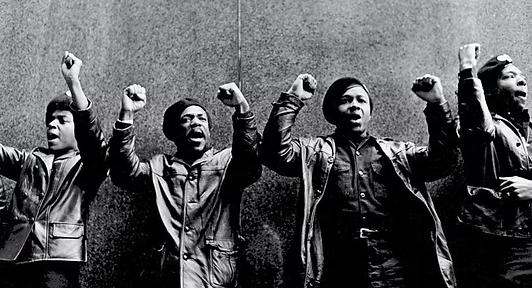
Huey Newton showed us that consciousness must be followed by action or it becomes another form of slow death.
These thinkers did not finish the work. They passed it forward. We are the next hands.
These essays are a cycle.
You may enter anywhere. Some of you have the self-love down but have never developed political consciousness. Some of you are politically educated but psychologically exhausted by what this system has done to your sense of worth. Some of you have been organizing for years and have lost somewhere along the way the love that started the work. Some of you are just beginning to ask whether any of this is real.
Wherever you are — that is where the work continues. Keep moving.
This series will ask something of you. Your time. Your honesty. Your willingness to examine things that are easier to leave unexamined. Reading is not enough. These essays are a call to move — to organize, to build, to claim the political power that turns everything else from theory into reality.
Multiple essays. Each one takes a single conviction — love, direction, psychology, power, education, exhaustion, division, human rights, loyalty, liberation — and opens it fully. Written to be argued with, passed on, acted on — read on a porch, in a barbershop, at a kitchen table, before an organizing meeting.
To the white liberals and progressives who find these pages: you are welcome here. But understand what you are welcome to. You are the witness. What you will witness — if you read honestly — is the account of a fight you believed was finished. It was never finished. If that unsettles you — good. This work is designed to make you honest.
The North Star is improving the daily lives of Black people. By any means necessary.
The material, measurable, daily improvement of Black life — in safety, in health, in education, in economic stability, in political power, in the freedom to determine the conditions of your own existence.
That is the destination. It belongs to you. To every Black person willing to do the work of getting there.
That is where we are going.
The essays begin now.
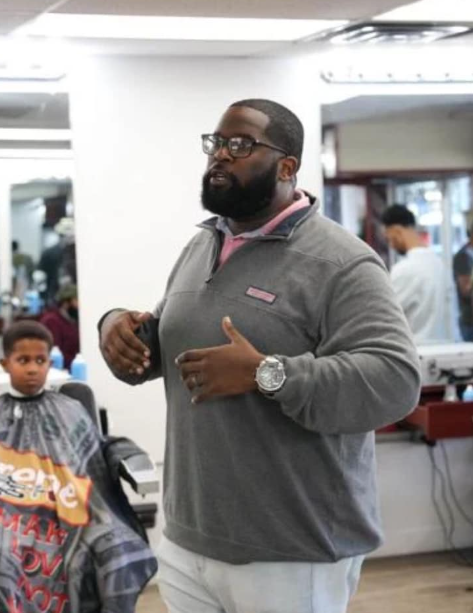
John M. Maina, Founder
Lancaster County, Pennsylvania
Black Voter Outreach Network of Pennsylvania
