

What happened Tuesday — nationally, in Pennsylvania and here at home. All results are unofficial as of Thursday morning, Nov. 5.
Tuesday was a wave election. Voters handed Democrats both chambers of Congress, a Democratic trifecta in Harrisburg and a string of historic firsts — many of them made by Black candidates and Black voters, just six months after the Supreme Court gutted the Voting Rights Act.
The Message covers elections for one reason: what they mean for the everyday lives of Black Pennsylvanians — our right to vote, our paychecks, our health care, our schools and who speaks for us. Here's what happened, what it means for us, and what we're still watching. In Lancaster County, the wave came up short.
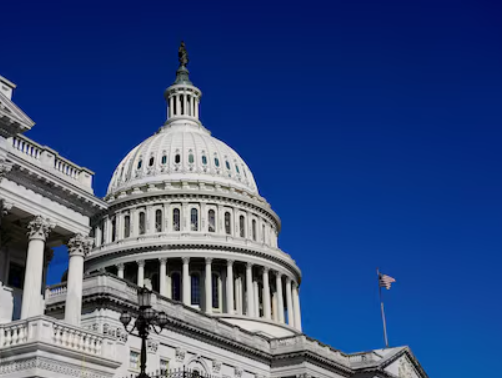
US Capital Building
The nation
The Senate flipped. Republicans entered the night with a 53–47 majority. Democrats now hold at least 54 seats after flipping seven: Kansas, Iowa, Texas, Ohio, Maine, North Carolina and South Carolina. In Texas, James Talarico became the first Democrat elected to the Senate from the state in 38 years.
Two races are still being counted:
Mississippi: With 96 percent counted, Democrat Scott Colom leads Sen. Cindy Hyde-Smith by 1,138 votes. Mail ballots can still arrive through Nov. 10.
Alaska: Mary Peltola narrowly led Sen. Dan Sullivan, 48.2 to 47.9 percent, in Wednesday's count.
Win both, and Democrats reach 56 seats.
The House flipped. Republicans held a 219–214 majority going in. NBC News projects Democrats will finish with about 258 seats, a gain of roughly 28, with dozens of races still uncalled.
Black voters made history.
Keisha Lance Bottoms was elected governor of Georgia — the first Black woman elected governor in American history, in the state that once used poll taxes and white primaries to keep Black people from voting.
Wes Moore won re-election in Maryland. David Crowley will be Wisconsin's first Black governor. Republican Byron Donalds won in Florida, becoming the first Black Republican elected governor in the country. [CONFIRM: Aaron Ford, Nevada.]
Before Tuesday, America had elected three Black governors in 250 years. Come January, several will serve at once for the first time.
Hakeem Jeffries is in line to become the first Black Speaker of the House. Juliana Stratton won Illinois' Senate seat, so three Black women will serve in the Senate at the same time for the first time.
Black voters delivered. Early national estimates show Black voters backing Democratic House candidates by roughly 9 to 1. In Georgia, Texas, Florida and Michigan, Black early and absentee voting ran 20 to 53 percent ahead of the same point in 2022, according to the NAACP. Final turnout data by race isn't available yet.
What it means for us: A Democratic Congress can put the Voting Rights Act back on the table. The protections the Supreme Court stripped away in April can only come back through new law, such as the John Lewis Voting Rights Advancement Act. Control of both chambers also means control of spending bills and the power to hold hearings — on health care, on federal cuts that hit working families, and on how this administration treats Black communities. President Trump still holds a veto. So the question isn't whether this Congress can fix everything. It's whether it will fight for what Black voters just delivered.
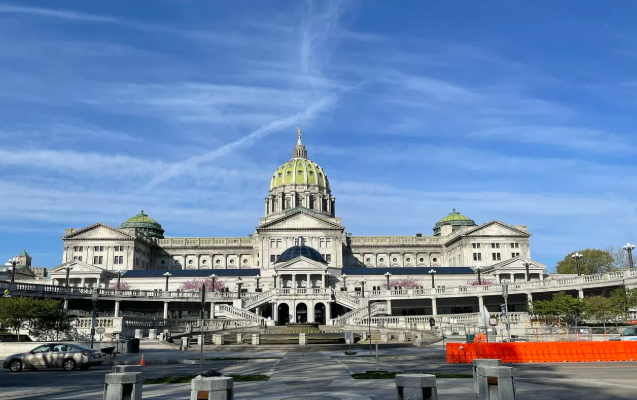
PA Capital Building
Pennsylvania
Gov. Josh Shapiro won a second term in a landslide.
Four U.S. House seats flipped to Democrats: Bob Harvie over Rep. Brian Fitzpatrick (PA-1), Bob Brooks over Rep. Ryan Mackenzie (PA-7), Paige Cognetti over Rep. Rob Bresnahan (PA-8), and Janelle Stelson over Rep. Scott Perry (PA-10). Next door in the 10th, Stelson ended Perry's seven terms, carrying Dauphin County with about 60 percent.
Harrisburg has a Democratic trifecta for the first time in more than 30 years. Democrats flipped four state Senate seats and lost one, turning a 27–23 Republican Senate into a 26–24 Democratic one. In the state House, Democrats grew their majority from 103 seats to at least 111.
The one Senate seat Democrats lost statewide was ours.
What it means for us: For years, a Republican state Senate blocked bills that passed the House — including election legislation, which Senate Republicans refused to move unless Democrats agreed to a voter ID constitutional amendment, Spotlight PA reported. That wall is gone. Shapiro says he'll use the trifecta to raise the minimum wage, protect abortion rights and address housing. Those are kitchen-table issues for Black families across Pennsylvania, from Philadelphia and Pittsburgh to Harrisburg, York and Lancaster. A Democratic legislature and governor could also shape Pennsylvania's next congressional map — which matters more than ever now that federal protections against maps that dilute the Black vote have been gutted. The test now is follow-through.
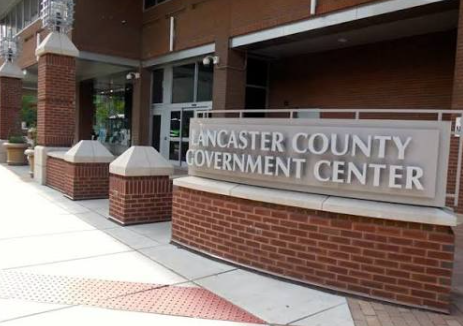
Lancaster County Government Building
Lancaster County
Shapiro carried Lancaster County, 110,620 to 100,933. Almost no other Democrat did.
36th Senate District: Republican Tom Jones beat Sen. James Malone, 65,126 to 54,184. Malone had won the seat by 526 votes in a 2025 special election.
11th Congressional District: Rep. Lloyd Smucker beat Nancy Mannion. In the Lancaster County portion, Smucker won 113,851 to 100,500.
97th and 98th House Districts: Republicans Steve Mentzer and Nicky Woods won.
49th and 96th House Districts: Democratic Reps. Ismail Smith-Wade-El and Nikki Rivera held their Lancaster city seats easily.
Library tax: Voters rejected it, 63 to 37 percent.
And the 41st is still too close to call. Rep. Brett Miller leads Brad Chambers by 41 votes, 14,225 to 14,184. As of Wednesday, 175 provisional ballots were under review, 18 military and overseas ballots had come in uncounted, and 16 more were still out. A final result could take a week or two. If it stays this close, a recount is possible; the Chambers campaign would lead that effort. The Message first reported Wednesday morning that this race was too close to call. Brad Chambers is still in this.
What it means for us: When the new session starts in January, Lancaster County will have no Democrat in the state Senate — just as Democrats take the majority there. The county's voice inside that majority now runs through the House, through Reps. Smith-Wade-El and Rivera and, if the count goes his way, Chambers. That's why every ballot in the 41st matters. And with the library tax defeated, the future of funding for the county's 14 libraries is uncertain — a real question for families who depend on them for internet access, job searches and children's programs.
What we're tracking
It's too early to explain Lancaster County. But the numbers are already raising questions.
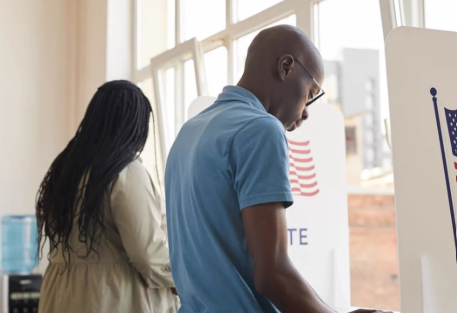
Turnout fell — most of all in the city. Countywide turnout was about 59 percent, down from 63 percent in the 2022 midterm. In a year when early voting set national records, Lancaster went the other way. The drop was steepest in Lancaster city, home to many of the county's Black residents: 42 percent turnout, against 61 percent in the rest of the county. In the city's 7th Ward, it was 31 percent. Nationally, Black voters are being credited with powering this wave. Here at home, the work of turning out our own neighborhoods isn't finished.
The Republican vote dropped harder. Compared with 2024, the Republican vote at the top of the ticket fell 39 percent. The Democratic vote fell 8 percent. Some drop is normal from a presidential year to a midterm, but Republicans fell much further. In the 41st, a 4,000-vote Republican win in 2024 shrank to 41.
Voters split their tickets. Shapiro carried the precincts of the 36th Senate District by nearly 6,000 votes. Malone lost those same precincts by nearly 11,000. Malone ran about 14 points behind Shapiro across the district — not in one or two townships, but nearly everywhere. Chambers ran about the same distance behind Shapiro in the 41st. Lancaster voters chose Shapiro, then voted Republican down the ballot.
Democrats voted against the library tax, too. The "no" side drew about 32,000 more votes than Garrity. Tens of thousands of Shapiro voters said no.
Registration is shifting. Republicans still make up about half of Lancaster's registered voters, against 31 percent for Democrats. But this year, Democrats added 3,258 voters while Republicans lost 233.
Conservative strongholds like Kansas, Iowa and Texas moved. Lancaster County didn't. In the biggest Democratic wave in years, the status quo here barely changed. Why? That's the story we're chasing.
What we'll be watching for Black Pennsylvanians
Our vote: Whether the new Congress moves to restore the Voting Rights Act, and whether Harrisburg strengthens voting access now that the Senate has changed hands.
Our paychecks and our health: Whether the trifecta delivers on the minimum wage and housing, and whether Congress pushes back on federal cuts that land hardest on working families.
Our representation: The final count in the 41st, and who speaks for Lancaster County in a Democratic-led Harrisburg.
Our neighborhoods: Why city turnout lagged, and how to change it. Local races for county commissioner, city council and school board are on the ballot in 2027. They decide library funding, schools and policing, and they're often won by a few hundred votes.
We're also waiting on party-level turnout numbers and certified results. We'll report what we find — and what it means for us.
All figures are unofficial and subject to change until results are certified. Pennsylvania counties have three weeks from Election Day to certify.
Sources: Lancaster County unofficial results; Pennsylvania Department of State registration data; LNP | LancasterOnline; Spotlight PA; CBS Philadelphia; WHYY; NBC News; ABC News; Associated Press; The New York Times; NAACP; Word In Black.
