
Black History Month Is About Resistance — Not Theater
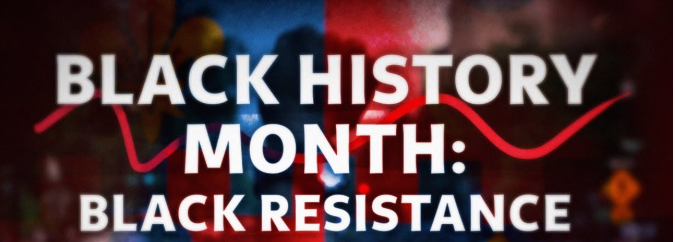
The City of Lancaster raised a flag today. The county will issue a proclamation later this month.
Today, there were speeches, photos, and logos lined up neatly. A proclamation was read aloud. Black organizations were invited to City Hall for a moment of visibility. And later this month, the county commissioners will invite similar groups to the county government building to do the same.
It will stop there.
Black History Month did not begin as a celebration.
It was an act of resistance.
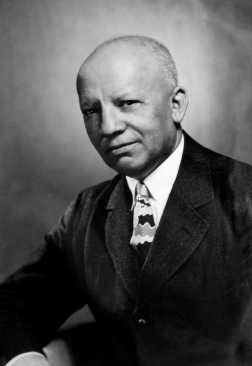
Carter G. Woodson
In 1926, Carter G. Woodson created Negro History Week as a direct challenge to Jim Crow. Black people were being erased from textbooks, classrooms, and public memory by design. Teaching Black history was not symbolic—it was defiant. It was dangerous. It was a refusal to accept erasure as fate.
That resistance mattered.
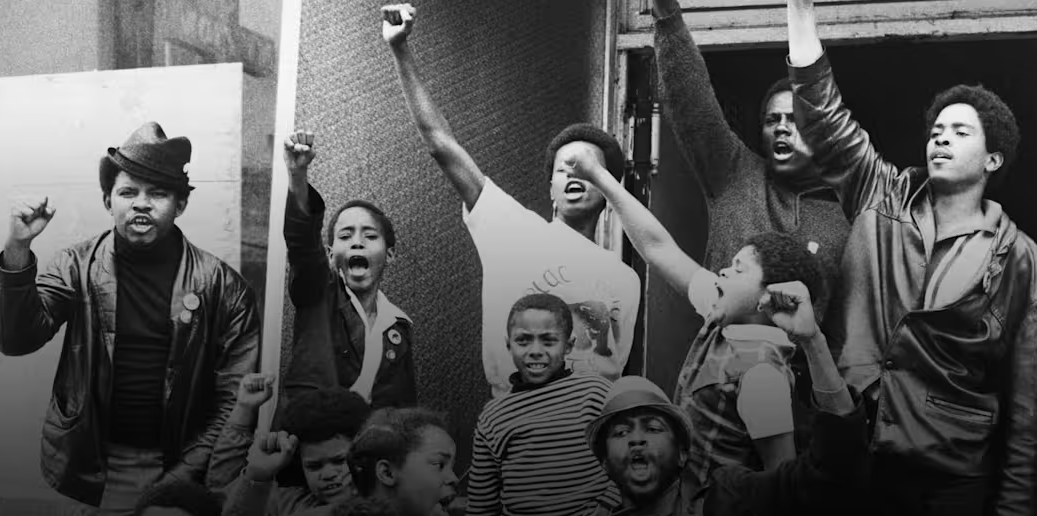
It helped lay the intellectual groundwork for the Black Power movement decades later—when Black people demanded control over institutions, labor, housing, education, and political power. Not recognition. Power.
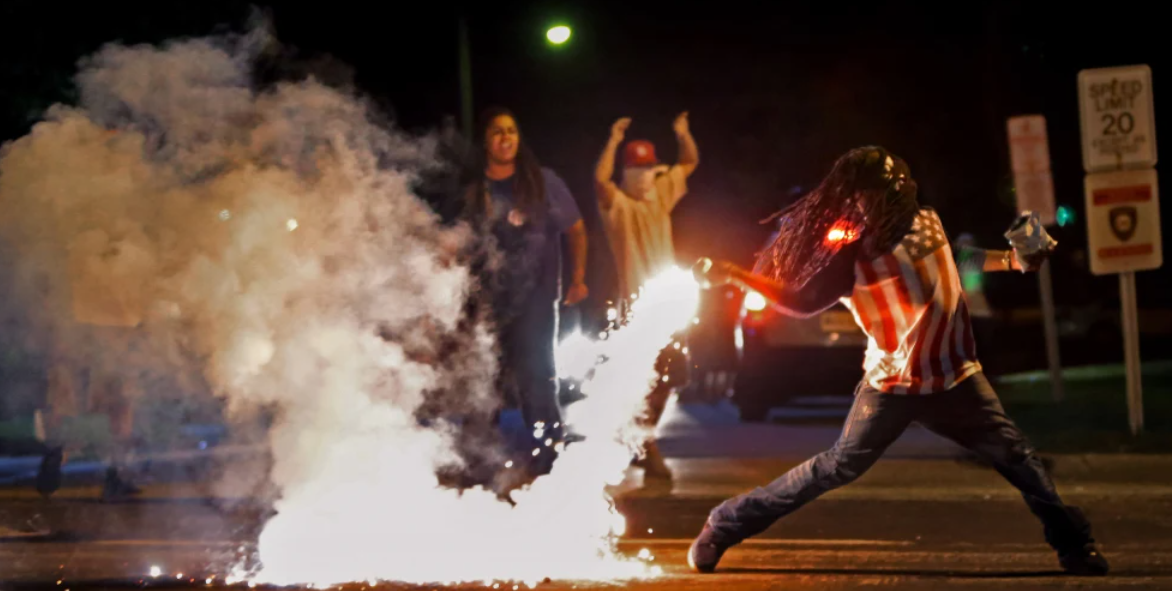
Edward Crawford returns a tear gas canister fired by police who were trying to disperse protesters in Ferguson, Mo., on Aug. 13, 2014.Robert Cohen / St. Louis Post-Dispatch via Zuma Press
Years after that, the same lineage of resistance surfaced again in Ferguson through Black Lives Matter—another movement born from state violence, mass incarceration, and the insistence that Black life is not disposable.
Black history has never been neutral, It has always threatened something.
And today, it is dangerous again.
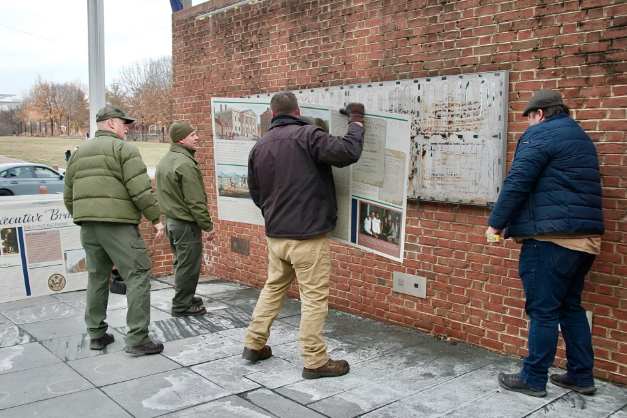
Slavery Exhibit in Philadelphia being removed
Across the country—accelerated by the Trump era—we are watching an aggressive effort to erase Black history in real time. Books are banned. Curricula are gutted. And just recently, even here in Pennsylvania, a slave history exhibit was illegally removed in Philadelphia under the orders of an authoratative regime. The message is clear: Once again, black history is only acceptable when it is quiet, sanitized, and powerless.
That context matters.
Because raising a flag without changing conditions is not resistance.
It is theater.
When a community accepts Black mass incarceration, voter disengagement, unemployment, wealth inequality, and homelessness—and answers that reality with proclamations and ceremonies—it is not honoring Black history. It is ignoring it.
Visibility without material change is not courage.
Recognition without redistribution is not justice.
Raising a flag is fine. Passing a proclamation is ok.
But it is not enough.
Some will say that ceremonies like today's can serve as organizing moments—that they galvanize communities and create momentum for future action.
Fair enough.
Then let's see it.
What work begins tomorrow that didn't exist yesterday? What policies will change? What budgets will shift? What systems will be confronted?
If today was about more than theater, then there must be measurable commitments. Accountability mechanisms. Timelines. Not vague promises to "do better" or "continue the work," but concrete answers to concrete questions:
What is the work? By when? Measured how?
Because without answers to those questions, today remains what it appears to be: a performance that asks nothing of power and changes nothing for Black people once the flag comes down.
Black History Month was never meant to be comfortable. It was meant to disrupt how this country understands itself—and to push Black people forward materially, politically, and economically.
What we are witnessing this month in Lancaster is not resistance.
It is theater.
And Carter G. Woodson did not risk everything so that Black history could be reduced to a photo op while Black people continue to suffer.
If Black History Month is going to mean anything at all, it must return to its roots: confrontation, truth-telling, and action—not ceremonies that ask nothing of power and change nothing for Black people once the flag comes down.
